

Tequila consumers are asking for more information about what’s inside their bottles. But sometimes producers aren’t allowed to give it to them.
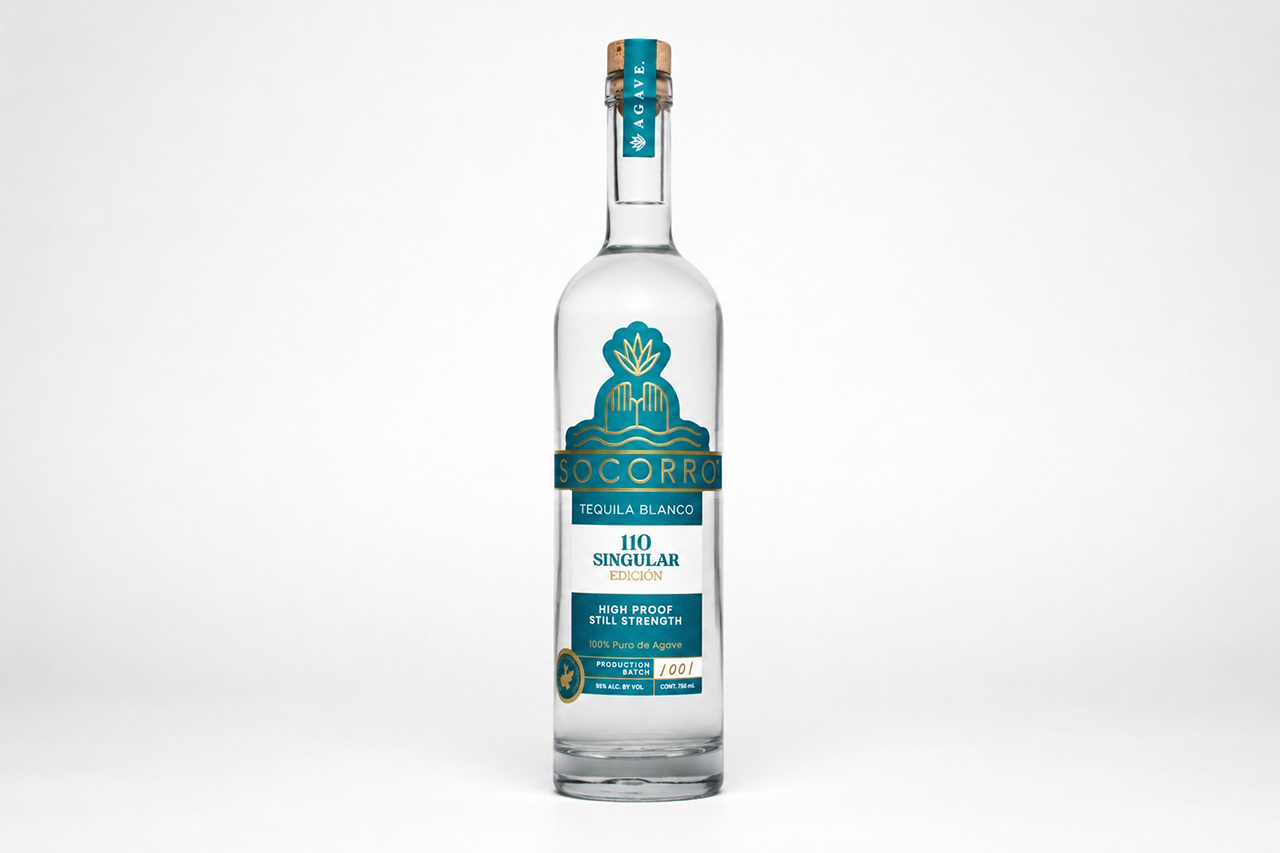
A bottle of the new Socorro Tequila Blanco 110 Singular recently arrived at Agave Matchmaker. The brand had sent it to us to taste, but before we even opened it, something on the label caught our attention.
Socorro had gone to unusual lengths to provide production details.
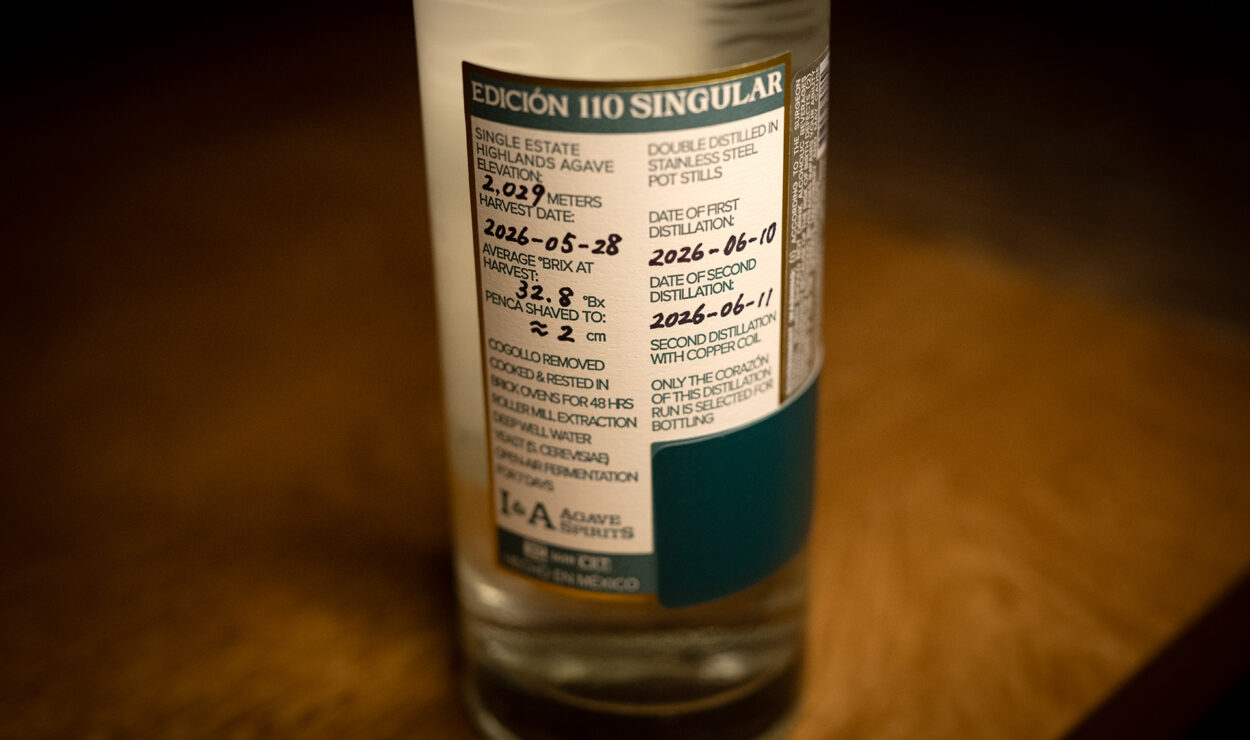
The label lists the agave harvest date, elevation, average sugar content at harvest, cooking method and duration, extraction method, water source, yeast species, fermentation time, type of still, and even the dates of the first and second distillations.
That’s already far more production information than you’ll find on most tequila bottles.
But there was also a large green sticker covering part of the label. And naturally, we wanted to know what was underneath it.
So we searched the U.S. Alcohol and Tobacco Tax and Trade Bureau’s public COLA database, where labels submitted for approval can be viewed. There we found the original Socorro label images, including the information hidden underneath the sticker on the bottle in front of us.
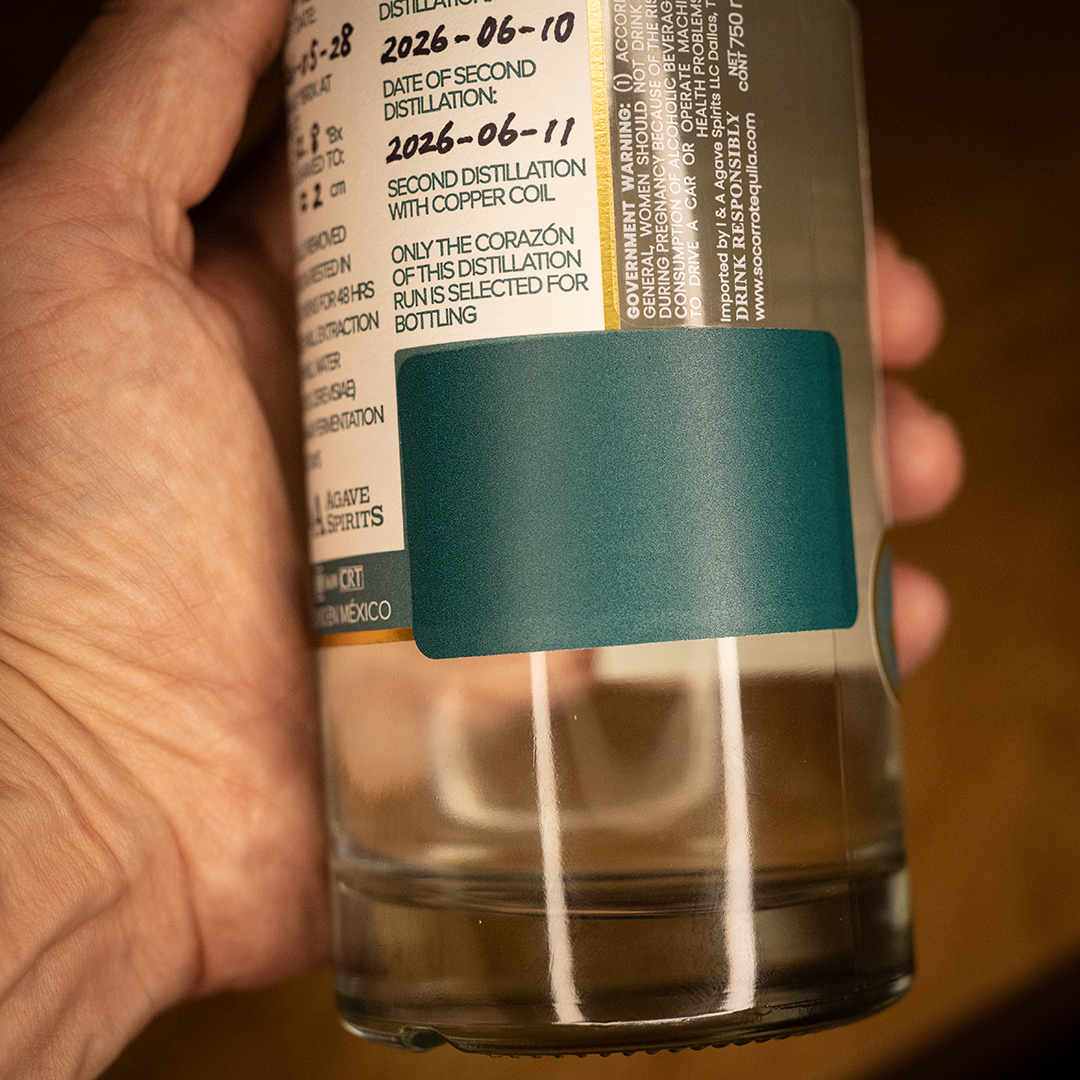
It was a laboratory analysis.
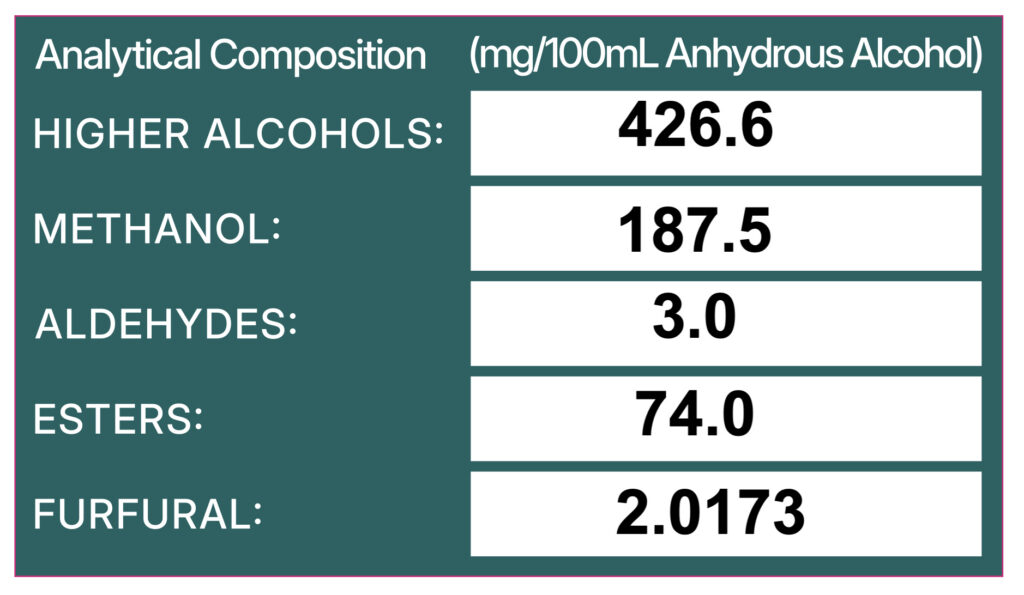
The original label disclosed five measurements from an analysis of the tequila: Higher Alcohols, Methanol, Aldehydes, Esters, and Furfural.
So why cover them up? We contacted Socorro to find out.
“The CRT reviewed and approved the complete label, including the analytical composition label, three separate times,” says a spokesperson for I & A Agave Spirits. “The cover label on the U.S. bottles was applied to comply with U.S. labeling requirements.”
Socorro isn’t sold in Mexico. It is made there, of course, and its label went through the Mexican regulatory process, but the product is sold in the United States.
According to the brand, the complete label, including the laboratory results, was approved by the CRT three separate times. But for those bottles to be sold in the U.S., the analytical information had to be covered.
What’s Underneath the Sticker?
There’s nothing alarming hiding there. In fact, all five measurements reported by Socorro fall within the specifications established for tequila under Mexico’s NOM-006 standard.
| ANALYSIS | |||
|---|---|---|---|
| Higher Alcohols | |||
| Methanol | |||
| Aldehydes | |||
| Esters | |||
| Furfural |
* Values are expressed in mg/100 mL of anhydrous alcohol. NOM-006 provides an exception under which the methanol minimum may be reduced when a producer demonstrates a viable process for reducing methanol.
So what exactly are these things?
Higher Alcohols — 426.6
These are alcohols other than ethanol that are created primarily during fermentation. Different compounds in this family can contribute fruity, floral, malty, vegetal, and heavier “fusel” aromas. They are an important part of the aromatic character of tequila.
Methanol — 187.5
Methanol occurs naturally during tequila production, particularly through the breakdown of pectins in the agave. Because methanol can be dangerous at sufficiently high concentrations, its level is regulated. The presence of methanol within the permitted range is normal in tequila.
Aldehydes — 3.0
This measurement primarily represents acetaldehyde, a volatile compound associated with fermentation and distillation. Depending on its concentration, acetaldehyde can contribute green, fruity, sharp, or solvent-like aromas.
Esters — 74.0
Esters are particularly important to aroma. Many are created during fermentation and can contribute fruity and floral notes. Numerous different esters have been identified in tequila.
Furfural — 2.0173
Furfural is formed through heat-related reactions during the cooking of agave and can carry through into the distilled spirit. It can contribute cooked, toasted, nutty, and caramel-like characteristics.
These five numbers won’t tell you whether a tequila tastes good. Chemistry isn’t a tasting score.
But for someone interested in how tequila is made, they provide another piece of information about what’s actually in the bottle.
What’s Actually Required on a Tequila Label?
This raises a larger question: How much are tequila producers actually required to tell us?
Perhaps less than you might expect.
For tequila imported into the United States, the importer must obtain a Certificate of Label Approval, commonly called a COLA, from the TTB before the product can be released from Customs custody. TTB regulates what information must appear on distilled spirits labels and how certain claims and disclosures can be presented.
Required information includes things such as the brand name, class or type, alcohol content, net contents, importer information, country of origin, and the government health warning. Additional disclosures are required under certain circumstances.
But perhaps the most surprising thing missing from most tequila labels is something consumers see every day on other products: An ingredient list.
Distilled spirits aren’t generally required to carry a complete “Ingredients:” list telling consumers everything that went into the bottle. Certain substances require disclosure under specific circumstances, but there is no general requirement for a tequila label to list every ingredient used to make the product. TTB’s own mandatory-label guidance reflects this distinction, identifying particular substances that require disclosure under certain circumstances rather than requiring a comprehensive ingredient statement.
This is particularly significant for tequila because Mexican regulations permit the use of certain additives within established limits. In many cases, consumers can’t determine from the label alone whether those substances were used.
At the same time, producers who choose not to use permitted additives face another labeling restriction: the CRT no longer permits claims such as “Additive Free,” or other language it interprets as communicating the absence of permitted additives, despite having previously allowed such terminology.
The result is an unusual transparency problem.
A tequila producer generally isn’t required to give consumers a complete list of everything used to make the product, while a producer that wants to voluntarily provide more information may encounter restrictions on what it is allowed to say.
Labels Aren’t Just Marketing
There are good reasons alcohol labels are regulated.
Producers shouldn’t be allowed to make false health claims, exaggerate age, misrepresent where a product came from, or invent production methods. Consumers need protection from information that is false or misleading.
Transparency doesn’t mean manufacturers should be able to print anything they want. But Socorro presents an interesting example of the opposite situation.
Here is a producer attempting to give consumers unusually specific information: when the agave was harvested, its sugar content at harvest, how it was cooked, how long it fermented, when it was distilled, and even the analytical composition of the finished tequila. The CRT approved all of that stuff.
But, the U.S. bottles required part of that information to be covered. And we only knew what was underneath because we went looking for it.
There is also an important element of discretion in the U.S. approval process. TTB regulations allow the agency to reject statements, designs, or other information that it considers false, misleading, or likely to create a misleading impression about a distilled spirit. That means information does not necessarily have to be factually incorrect to raise an objection.
In Socorro’s case, one possible explanation is that the TTB considered this level of technical laboratory data difficult for an average consumer to interpret without additional context. We don’t know whether that was TTB’s reasoning in this particular case, but it illustrates an inherent tension in label regulation: information intended to increase transparency can sometimes be restricted because it may also increase consumer confusion.
And that raises a question worth asking as tequila consumers demand greater transparency:
If the information is truthful, verifiable, and relevant to what’s inside the bottle, shouldn’t consumers be allowed to see it? That’s the TTB’s decision.
Oh, and this tequila tastes great, by the way. It won a Double Gold in the 2026 Agavos Awards.
Thank you Grover, very enlightening. It would be great to publish the acceptable/allowable range for each of those alcohols.
Hey Chris! That’s already there in the chart.
Well done.
Absolutely the ingredients should be mandatory on the label!
Its going into a person body.